
The Revolution Was Manicured: Adele Pham on the Legacy of Nailed It
After tracing the rise of Vietnamese nail salons across America, Pham went to nail school herself. Now she’s reimagining what beauty work and storytelling can be.

Ever wonder why so many nail salons in the U.S. are Vietnamese-owned and operated? From the “First 20 Vietnamese Manicurists” to an $8 billion industry, Adele Pham’s 2018 documentary Nailed It maps how refugee communities transformed American nail salons, while building generational craft, culture, and economic power.
The Nail Artist and Writer Katalina Mitchell interviewed Director Adele Pham on behalf of The Museum of Nails. The following As-Told-To has been condensed for clarity. Please join Katalina and Adele at our upcoming event, this Saturday. They’ll be in conversation for a fundraising screener event for the Museum of Nails Foundation.
ADELE PHAM:
“The modern global nail industry was built by women, women of color, who transformed it into the juggernaut so many people interact with daily. These stories must be told because an industry as widespread and culturally impactful as “nails” has a specific, incredibly empowering cultural origin.
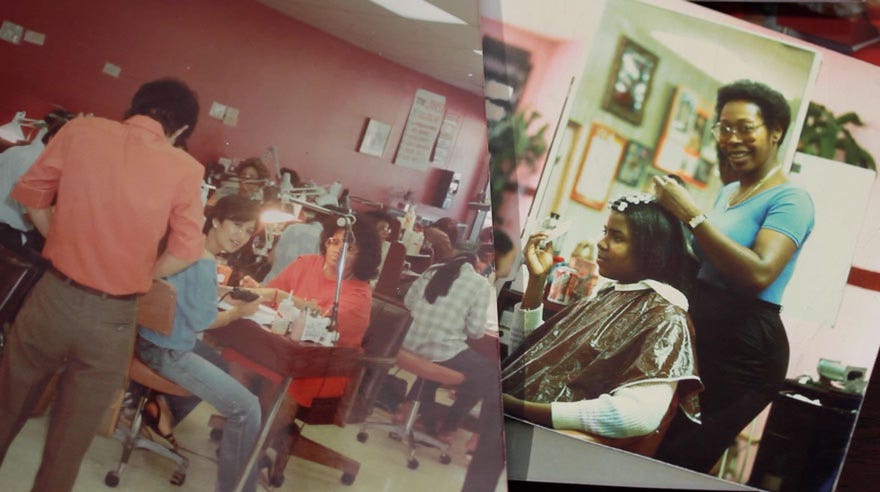
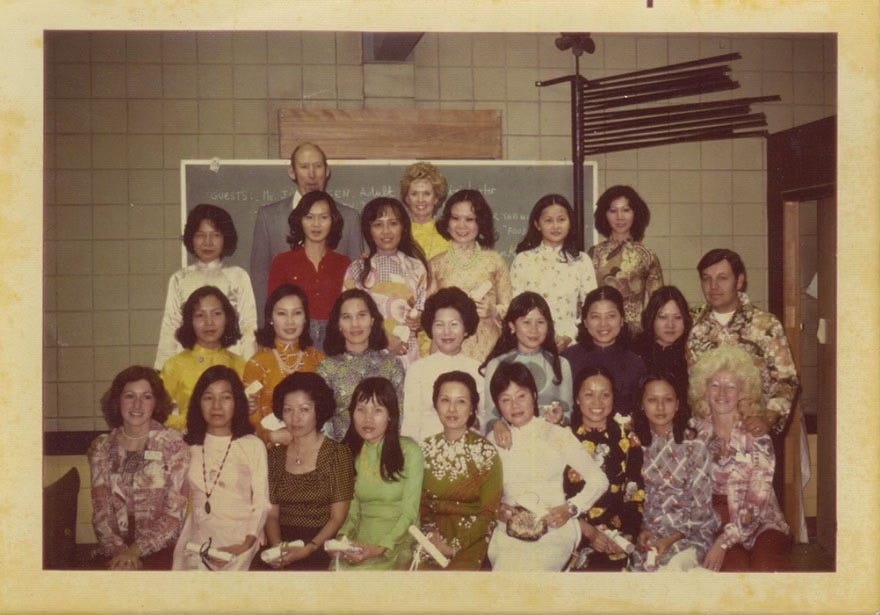
The Vietnamese nail salon industry, a crucial economic system for countless Vietnamese refugees and immigrants, was founded on altruistic actions. The industry’s current form likely wouldn’t exist without Tippi Hedren’s intervention, shepherding the “First 20 Vietnamese Manicurists,” or without Olivett Robinson’s friendship with Charlie Vo, a refugee with limited English, which led to the creation of Mantrap. Like I say in Nailed It, I would like Vietnamese to understand that without Black women, their salons wouldn’t exist. I would like true respect and harmony between the two groups, from whence came Mantrap!
For the longest time I didn’t want my voice to be guiding the story, because I had never worked inside the salon. But my editor Jessica Lee Salas helped me realize that this was also my journey, discovering my people. Having a white American mother, Vietnamese father, and not being able to speak Vietnamese separates me. But the “nail thing” helped me find my place.
Asian nail salons are perceived as predatory “chop-shops,” or that everyone working inside is a wage slave, dying of salon illnesses. If you’ve never had a personal relationship with a Vietnamese salon, or worse, a bad experience, the hype is so easy to feed into. Everyone is having a hard time making enough to survive right now, and we want a group of people to blame instead of the system itself that is more intangible. While I’m sure there are still salons that cut corners, use “MMA,”1 and nail techs who do suffer economically and physically, their stories are bigger than just that, and constantly moving.
Some of the most profound responses [to Nailed It] have come from nail techs and young Vietnamese Americans who felt deeply moved to see their own story reflected on screen. This is a powerful, transformative experience–to be seen and to feel in control of one’s own narrative–a feeling that is fundamentally important to all people and influences self-perception and interaction with the world.
I’m glad I could bring some of these nail matriarchs their flowers in their lifetime. There are more I’ll never meet, because they were never given the existential space to reflect on what it all meant. Too busy working.
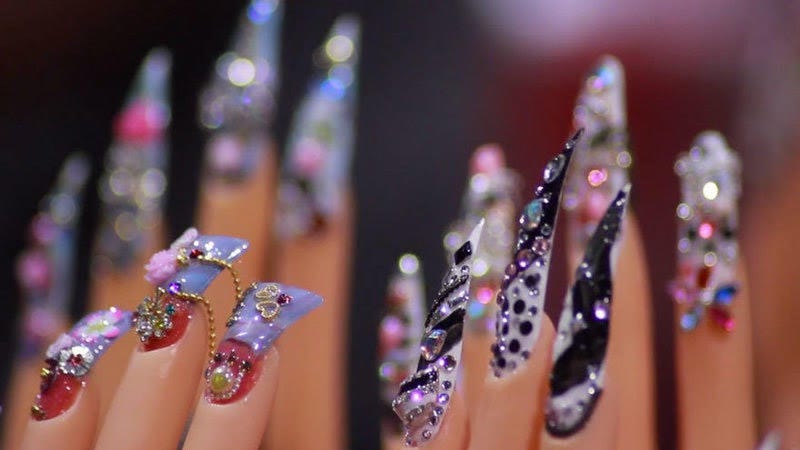
I’ve had the pleasure of being treated by some incredibly talented nail artists, and their work also inspired me to pursue my own nail license. I’d been working on a book about the Vietnamese nail industry for ages, and thought it would be cool to do a Nailed It follow-up. Going to nail school seemed like the perfect way to get some fresh, inside material for an epilogue and maybe a new film.
Unfortunately, the whole experience at the grant-funded school I attended was a massive letdown and honestly felt like a total scam. That whole mess just confirmed what everyone knows about nail schools: they teach the bare minimum, often questionable stuff, just to meet the state board requirements. Most students either already know how to do nails or learn on the job; they’re just there to log the required hours, and the schools know it. My perspective on the industry has changed a helluva lot! Now being a licensed nail tech is kind of surreal, and I’ve been writing the sequel.
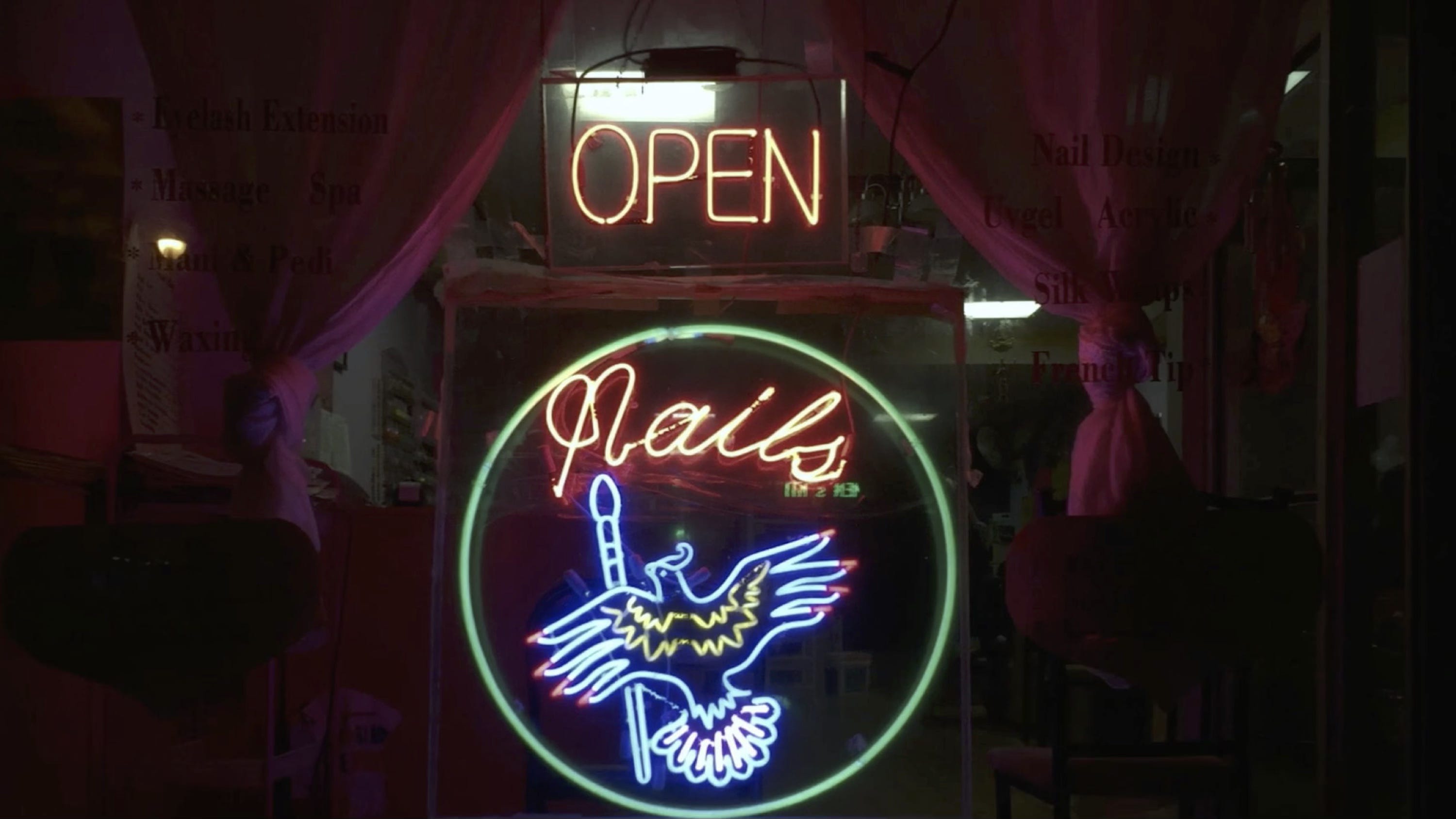
Whether you call it pampering or self-care, frequenting nail salons is also a vital act of looking after yourself. In a society that often overlooks women’s needs, this accessible ritual –one found on practically every corner– allows us to momentarily set the world aside and be treated with the royal care we deserve.”
Adele Pham is an omnifarious filmmaker with experience in all aspects of production. Her feature documentary Nailed It, about the Vietnamese nail industry, is the highest-streamed film on PBS’ America ReFramed, received a 2020 Telly Award, and is now available on Tubi. She is also a newly licensed nail tech and is looking for a salon to join in New York City. Have a lead? E-mail her at adelepham@gmail.com. Follow Adele: Instagram
Katalina Mitchell is a nail art specialist and beauty writer based in New York City. She is a contributor to Nail Files, the Museum of Nails Foundation Newsletter. Follow Katalina: Instagram | Substack

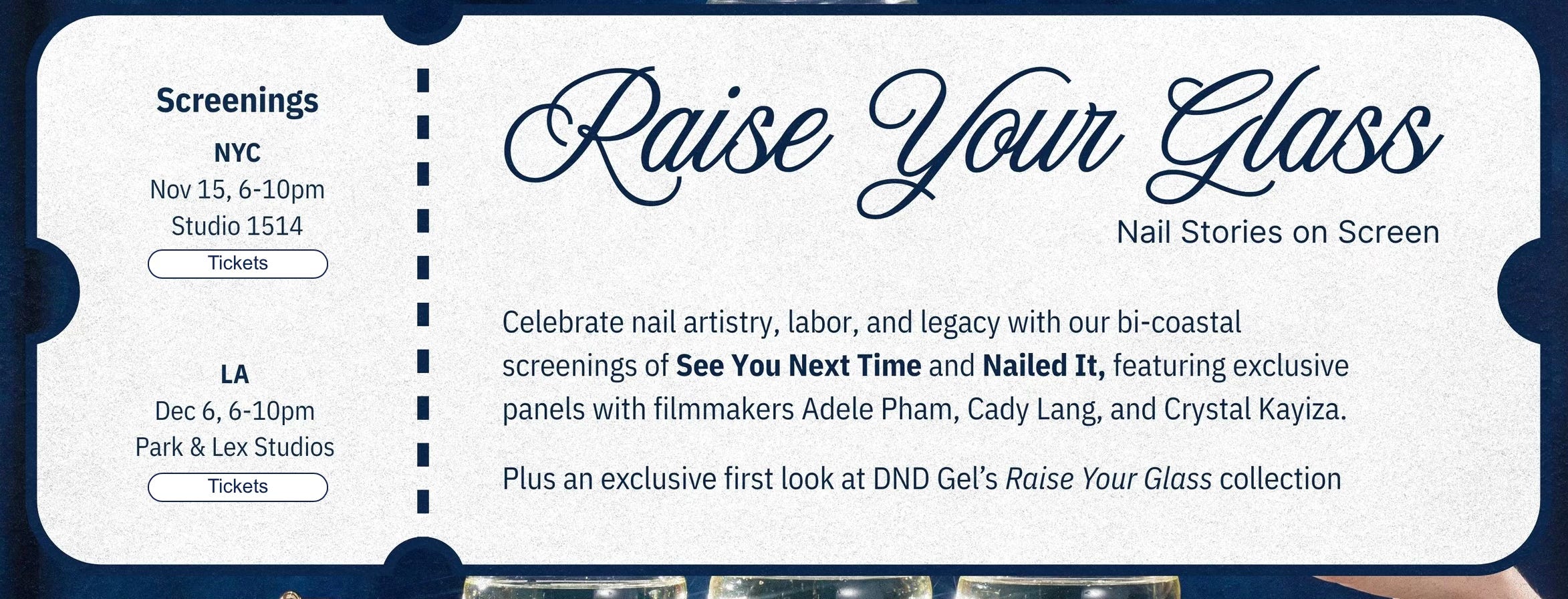
Come watch Nailed It with us. Get your tickets here.
MMA stands for Methyl Methacrylate and is used as cement in dentistry, orthopedic surgery and ophthalmology. It was used in the nail industry during the 1970s but was banned by the FDA after reported injuries. Nail liquid containing MMA has been known to cause allergic reactions, permanent loss of the nail plate and in some cases, permanent loss of sensation in the fingertips. It has a strong irritating chemical odor that does not smell like other acrylic liquids.